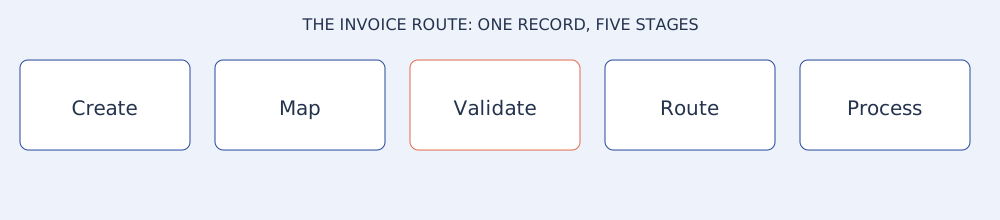
01 / Create
The supplier records the transaction in an accounting or ERP system. Source data, partner identifiers and document references need to be complete enough for the intended invoice format and recipient.
02 / Map
Source fields are translated into the agreed structured invoice model and syntax. The mapping should preserve business meaning, calculations and references.
03 / Validate
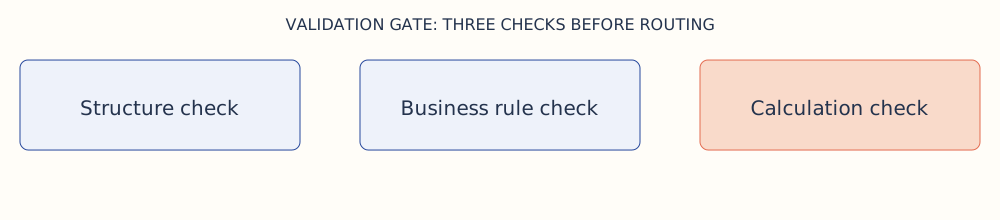
Checks may examine structure, required fields, code values, calculations and recipient-specific rules. A rejection should include an actionable reason and a way to correct or resubmit.
04 / Route
The invoice moves through a direct interface, provider or exchange network according to the recipient arrangement. A successful transport event is only one status in the overall journey.
05 / Process
The receiving system can match, approve, post or reject the invoice. Teams should distinguish delivery, technical acceptance and business approval, then reconcile exceptions.
Every guide in the library opens with a route check that names its stage on this path, so a reader can see where one decision sits before reading the detail.